

How To Set Color In Tie Dye
Choosing Tie Dye Colors
I think one of the fun things nigh tie dyeing is trying diverse color combinations together on a shirt. I know though that choosing colors that go together can be very intimidating to some people. So hopefully I can help take some of the stress out of choosing colors.
Let'south go over a little bit of colour terminology before we get into how to choose colors.
The 3 primary colors of tie dye are fuchsia, turquoise, and lemon yellowish. When you are dyeing with liquid dye, it mixes very much similar pigment would. Therefore, fuchsia and turquoise would mix and class purple. Fuchsia and lemon yellowish would mix and form orangish. So lastly turquoise and lemon yellow would mix and form dark-green. The colors mixed from combining 2 principal colors are chosen secondary colors (purple, orange and green).

Primary Tie Dye Colors
Tertiary colors are colors formed by mixing 1 of the primary colors with i of the secondary colors. For example: a teal color might be formed from mixing Turquoise and green, or lime green might be formed from mixing Lemon Yellowish and green.
It is important to remember that when you cull dye colors for a shirt they will probably mix on the shirt if they are next to each other. Therefore, you need to choose colors that volition blend well together. Dye colors that don't blend well together will form chocolate-brown areas on the shirt.
It's a skillful dominion of pollex to remember that you can put primary colors next to each other without any difficulty. However, you lot can not put secondary colors next to each other without them forming brown.
If you take a color bicycle or can print one off from the internet, you may find that helpful in choosing colors. For example: Analogous colors are colors that are abreast or adjacent to each other on the color wheel. Analogous colors will blend well together and will be very pleasing to look at. For example: on the colour wheel imperial has blueish-violet and turquoise on ane side and red-violet and fuchsia on the other side. You could add all five of these colors on a shirt together and they would look beautiful together.
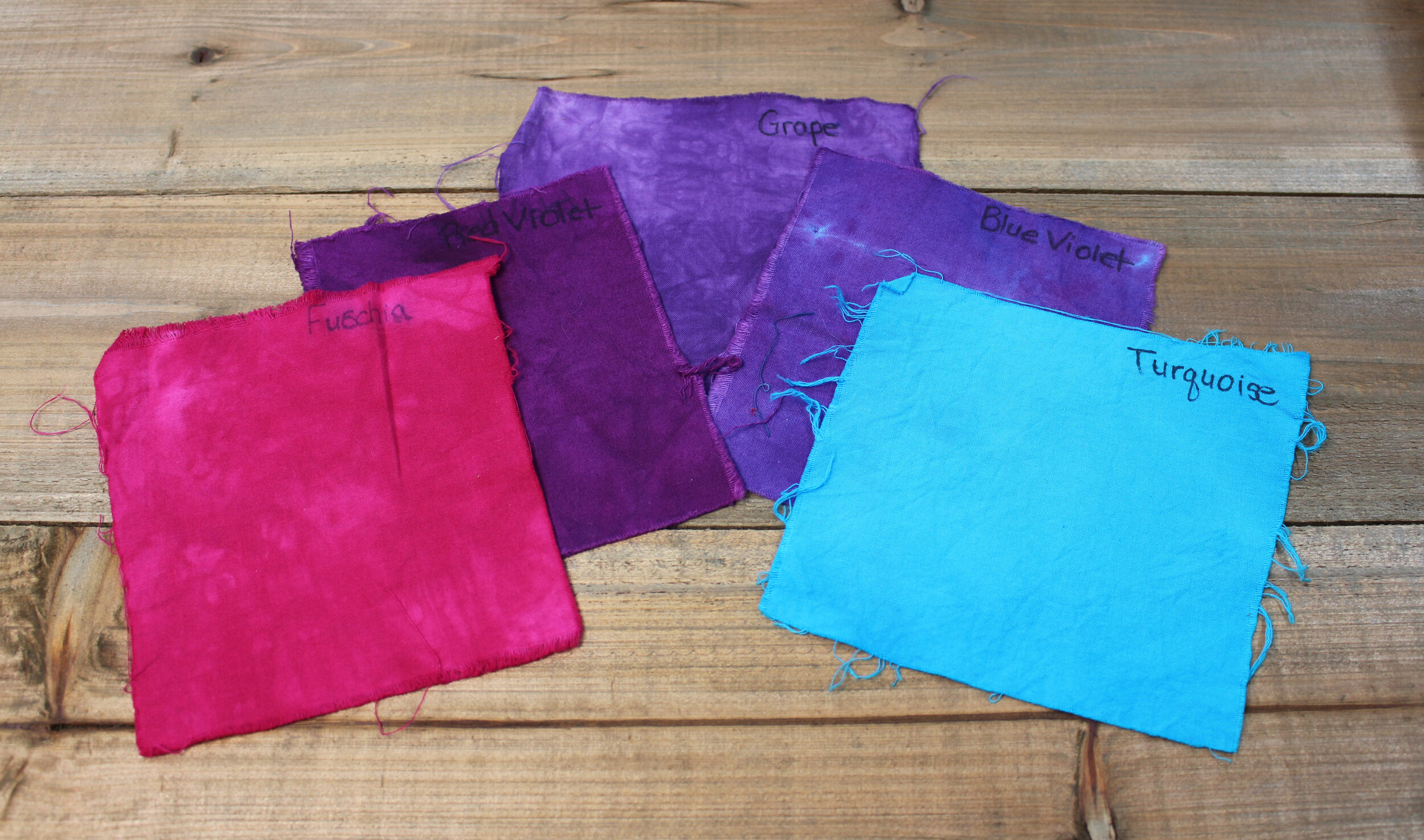
An case of Analogous colors
Complementary colors are colors that are opposite each other on the colour bike. Complementary colors will give high contrast to your shirt. However, most complementary colors will form brown when combined. Yellow and regal are an example of a complementary color combination. It will be high contrast and catch your attention, but if you don't apply them carefully you will stop up with unwanted brown areas on your shirt where the two color see.

An example of contrasting colors
Dharma Trading Company too as most of the other dye suppliers group their colors together in colour families on their websites. They usually put the blue shades that they offer together also as the imperial shades, pink shades, oranges, etc… This can make information technology easier sometimes because yous can sort of get a sense of where the color will fall on the colour wheel based upon the colors effectually it. For example - Dharma's Pagoda Cherry-red is in between Tangerine and Jungle Scarlet on their color chart. In my opinion, Pagoda Red leans more toward darker orange than it does pure cerise. That would make sense since it is right afterwards Tangerine which is an orange colour. Therefore, I usually utilize it as a darker shade of orange instead of red. If I were to mix Pagoda Red and Grape next to each other on a shirt, I would probably end up with some brown forming where the 2 colors touched.

Pagoda Cerise
To become a feel for exactly what a colour looks like - I like to make liquid dye color swatches for each of my colors when I purchase a new color. I commonly mix a small corporeality (i/4 - one/2 cup of the dye) and make color swatches from 100% cotton fabric. I have and so many dye colors that I sometimes feel lost without my colour swatches. It is hard to tell the subtle differences between colors in the same family unit (like the dissimilar blues, greens, etc…) without having colour swatches to refer to. When choosing colors for a shirt, I will pull my swatches and mix and match them until I find the perfect color combination.
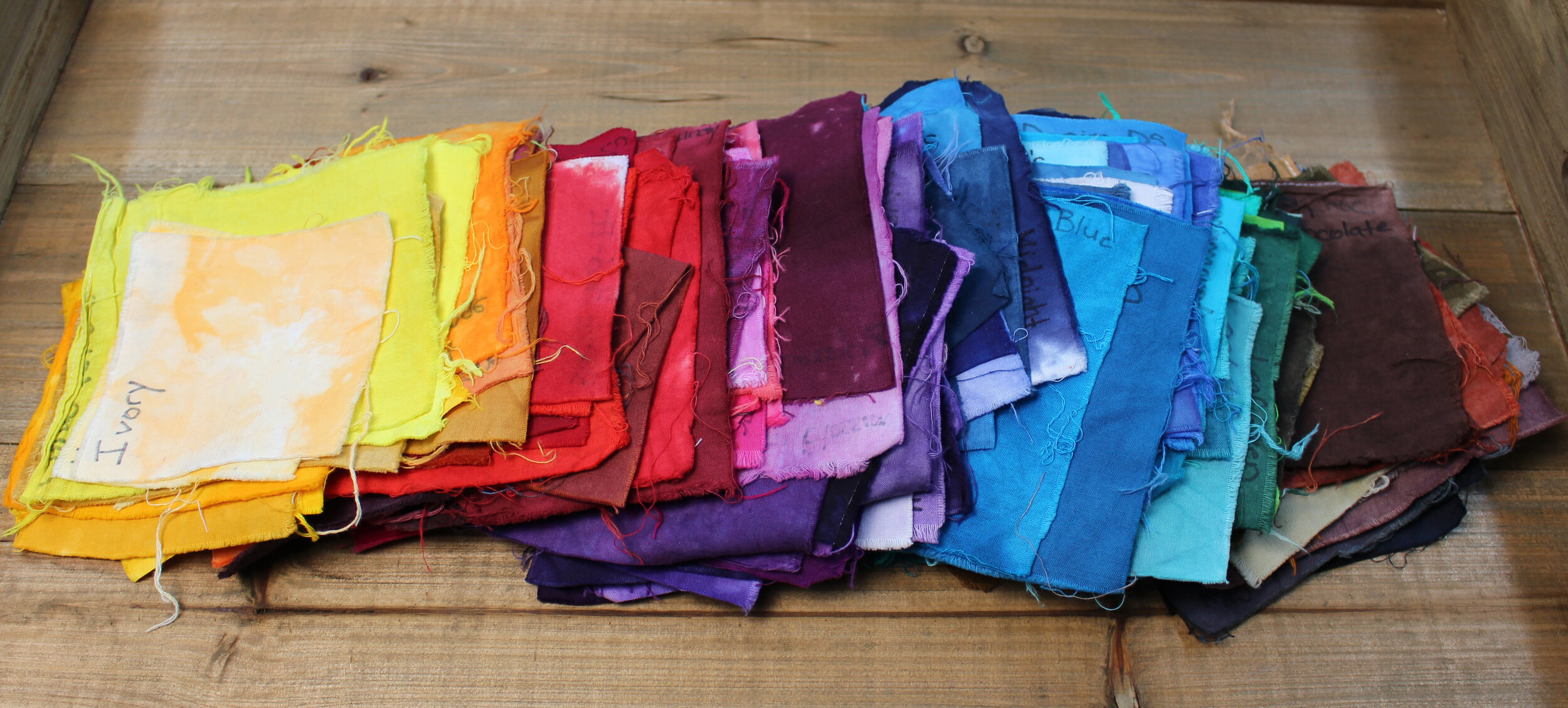
My colour swatches
You can mix your own colors using the primary colors of dye. Notwithstanding, I usually don't do this very oft. Since I make tutorial videos it is easier to stick to using colors that tin be purchased and don't have to be mixed. That way if someone would similar to brand the shirt in the video, they tin refer to the links beneath the video in the clarification for the colors of dye that were used.
If you choose to mix your own dye, keep notes on the verbal amounts of dye that you used to mix the color in case you would like to try to replicate it in the future. I learned my lesson with that one painting a bath one fourth dimension. I mixed a wall color that I loved, only I ended up having to repaint the entire bathroom because I ran out of paint and couldn't replicate the color exactly.
If you would like to learn more nearly mixing your own dye, Paula Burch has some more than data and a mixing chart on her webpage. http://www.pburch.net/dyeing/FAQ/procionMXcolormix_overview.shtml
Let's play around with pulling some color swatches for shirts. I recently made a shirt and used Plum, Aureate Yellow and Fire Red from Dharma Trading Company. Information technology was part of my Halloween Chilling Screw series and then I wanted the colors to be high contrast. However I didn't want a lot of chocolate-brown on the shirt. To avoid the brown that might exist formed from mixing Gold Yellow and Plum, I added Burn Carmine in between the 2 colors. If you notice the red is on either side of the Plum and at that place is no brownish on the shirt. That's because the Fire Red helps proceed the Gilded Yellow and Plum from touching each other and mixing to form brown.
Another color combination that works well is to choose colors from different color families and add in an world tone. For this combination, I chose Marigold, Wood Greenish, Cobalt Blue and Statuary. Since yellowish and blue make green - the combination of Marigold, Forest Light-green and Cobalt will all work well together. Bronze is the earth tone that will alloy well with all three of the other colors. With this color combination, you can add the colors in any order and you won't have an effect with unwanted brown. Bronze is in the dark-brown family, but whatever brownish colour formed by mixing Bronze with any of the other three colors will look natural on the shirt and work well.
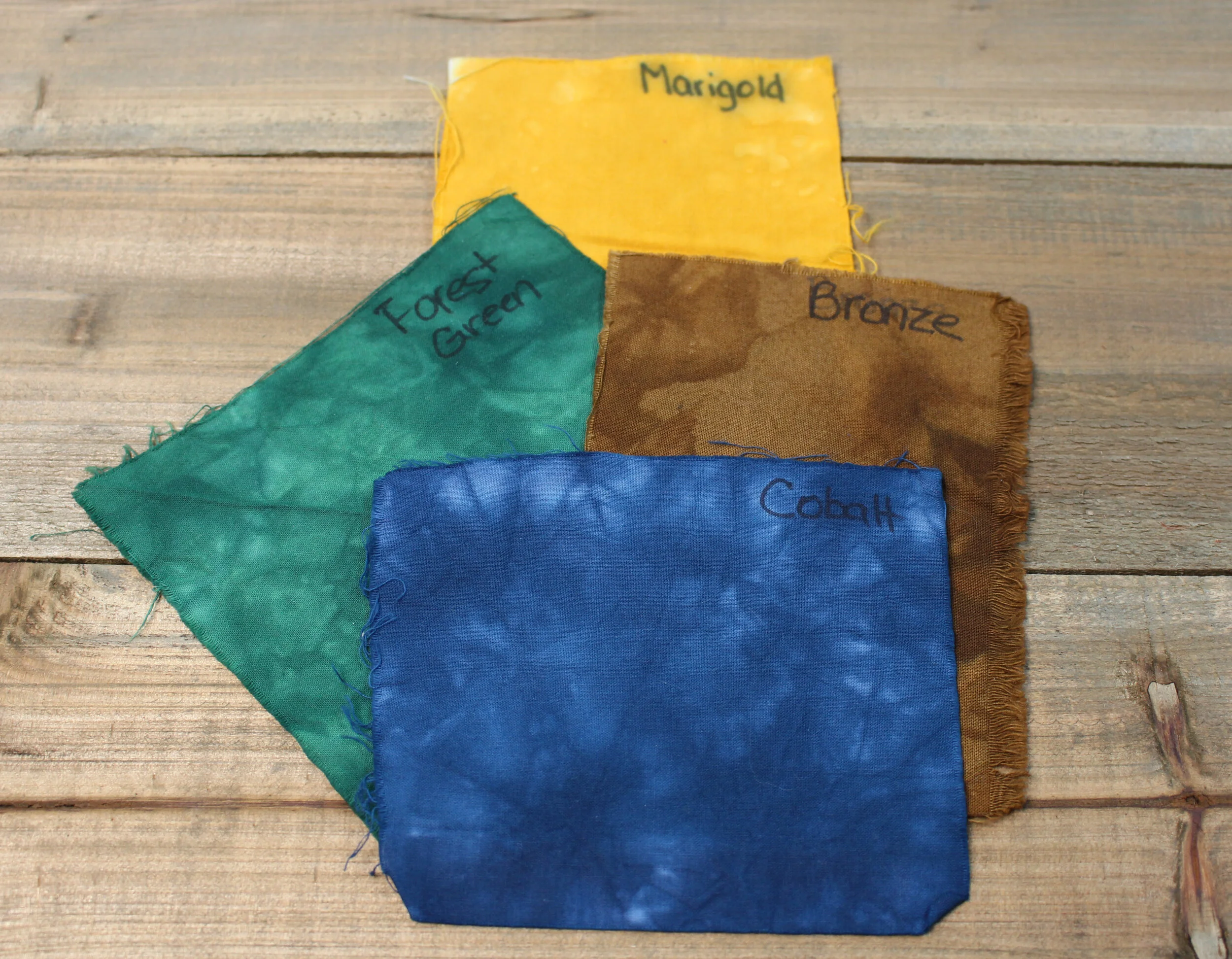
Three colors and an earth tone
In full general I use brown, gray and black shades equally neutrals. I think that dye shades that are in the brown family unit look actually good with light-green, orange and yellowish. If y'all look at Dharma's color chart the brown shades start correct after the light-green shades. Several of the brown shades toward the middle of the list have an orange tint and the ones toward the finish take a yellow tint. I've added some photos for an example. Since Terracotta is very crimson, I personally wouldn't use it with green, at least non the Granny Apple Green that I've shown in the photograph. I mix gray shades with red, purple, pinkish and blue a lot. In the photo I've shown some of my favorite Dharma Trading Company grays. I honestly beloved them all though. Black works great with any color. The photos are just an instance - brown, gray and blackness will get with virtually any color. The Statuary and Brazilnut that I've shown in the photo on the left both wait actually expert with purple, pinkish, red and blue too. In plough the gray colors in the right photograph go really well with greenish, orangish and xanthous.
I as well similar to use blackness and dark-brown as buffer colors. What I hateful past that is, if I have colors that I know are going to blend on a shirt and grade brown, I will purposely place either brown or black in that area. For example: I've made several Halloween shirts using the color combination of Deep Orange, Lime Pop and Grape. None of those colors alloy well together, just they are great Halloween colors. So to avoid getting a lot of dark-brown on the shirt, I added a line of blackness in between the colors. The black divides the colors and with this particular color combination, it helps brand each of the colors stand up out more than. I remember blackness dye is a great contrast color that makes almost colors really pop.
I use this trick a lot. I normally use black as a buffer color, but it works too to use dark-brown. Depending on the colour combination y'all are using you tin can also apply other colors equally buffer colors (like greyness, navy, etc…).
It is too fun to mix colors in the aforementioned family. The photo on the left is Plum Blossom and Plum. Notice how they are both in the purple color family, simply the Plum Flower is lighter. They are both more of a red purple too. The next photo shows Lilac and Deep Purple. They are both in the imperial colour family too, but they are more than blue imperial. The next photo shows how they would all await together…beautiful! If you would similar a dark pop on your shirt, it would be pretty to add Nightshade which blends actually well with all the colors.
The colors that I've used to a higher place in my examples are all Dharma Trading Company colors. I purchase dyes from several other suppliers though (Grateful Dyes, Prochemical and Dye, Custom Colours, and Dyespin) and sometimes the colors with the same name don't await the same. In the photograph below the color on the left is Bright Light-green from Grateful Dyes and the i on the right is Bright Green from Dharma. Both colors are really pretty, but the Grateful Dyes one is more than yellow where the Dharma one is more than bluish. This is a slap-up example of where a color swatch is very helpful.

Above I've mainly been referring to choosing colors for liquid dyeing. Ice dyeing is very similar, but I'll cover it in a separate blog post since at that place are a couple other factors to consider when choosing colors for ice dyeing.
Hopefully the information above has helped to brand you experience more comfortable experimenting with different colors and trying out unique and fun color combinations.
Source: https://www.funendeavors.com/tie-dye-blog/irtkahfumq0ogg580ec2wltoypioqx
0 Response to "How To Set Color In Tie Dye"
Post a Comment